
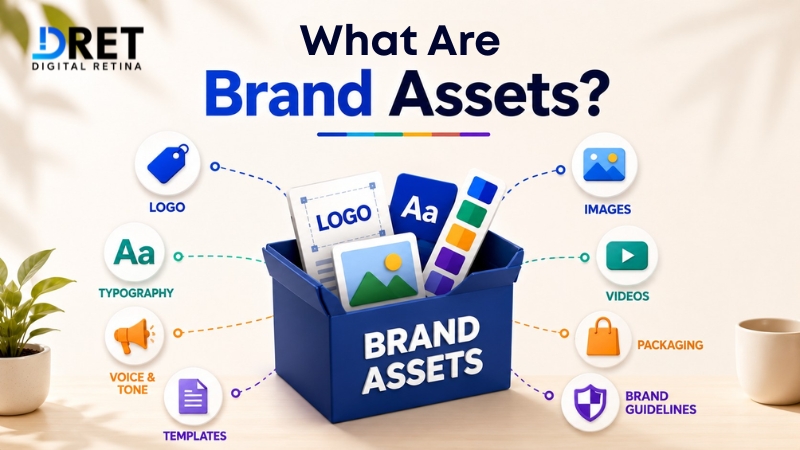
Brand assets are the unique elements that help people instantly recognize and remember a business. They include logos, colors, typography, taglines, brand voice, packaging, websites, and other distinctive identifiers that create a consistent brand identity across every channel. Strong brand assets improve recognition, customer trust, marketing effectiveness, and long-term brand value
Understanding Brand Assets
Why can you recognize certain companies in seconds—even before seeing their name? It isn't because of a single logo or slogan. It's because multiple brand assets work together consistently over time.
Brand assets are the unique identifiers that represent your business and communicate who you are to customers. From your logo and color palette to your messaging, website, packaging, and customer experience, these elements create familiarity and help people remember your brand wherever they encounter it.
Think about some of the world's most recognizable brands. Most people can identify Nike simply by its swoosh logo, McDonald's by its golden arches, or Coca-Cola through its signature red color and distinctive typography. These businesses have consistently used the same brand assets for years, allowing customers to recognize them almost instantly—even without seeing the company name.
This principle applies to businesses of every size, not just global brands. Whether you're launching a startup or managing an established company, strong brand assets help create a professional identity, build customer confidence, and differentiate your business in a competitive market.
As digital marketing continues to evolve, brand assets have become even more valuable. Customers may first discover your business through Google Search, social media, online reviews, AI-generated answers, or recommendations from friends. A consistent brand identity across all these channels reinforces credibility and helps people remember your business long after that first interaction.
Brand Assets vs. Digital Assets
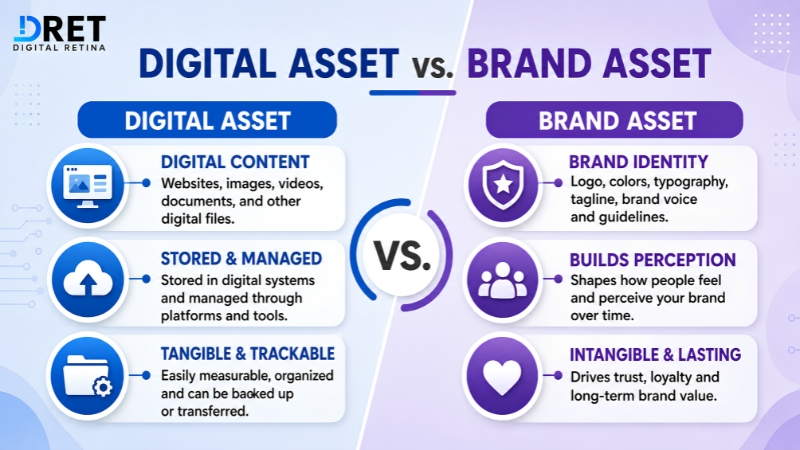
One of the most common misconceptions is that every digital file automatically qualifies as a brand asset. While the two often overlap, they serve very different purposes.
A digital asset is any file your business owns or uses digitally, such as presentations, PDFs, spreadsheets, stock photos, videos, or documents. These assets support day-to-day operations and marketing activities, but they don't necessarily contribute to brand recognition.
A brand asset, on the other hand, is intentionally created to represent your business. Its primary purpose is to make your brand recognizable and create a consistent customer experience across every channel.
|
Brand Assets |
Digital Assets |
|
Created to build brand identity |
Created for business or marketing use |
|
Help customers recognize your business |
Support operations, campaigns, or content creation |
|
Deliver long-term branding value |
May only be useful for a specific project or campaign |
|
Used consistently across customer interactions |
May never be seen by customers |
A Simple Example
Imagine your marketing team downloads a stock photo for a blog post.
At this stage, it's simply a digital asset because it hasn't been customized to represent your business.
Now imagine adding your company logo, brand colors, typography, and messaging before publishing the image on your website and social media.
That same file has now become a brand asset because it reflects your unique identity and contributes to customer recognition.
The difference isn't the file itself-it's the purpose it serves.
In short, every brand asset can exist as a digital asset, but not every digital asset becomes a brand asset. The defining factor is whether it strengthens your brand identity and recognition.
Why Understanding the Difference Matters
Recognizing the difference between brand assets and digital assets helps businesses avoid a common branding mistake: treating every marketing file as equally important.
When teams understand which assets directly influence brand recognition, they can:
-
Maintain greater consistency across marketing channels.
-
Reduce the use of outdated logos, colors, and templates.
-
Organize assets more efficiently.
-
Protect important branding elements from misuse.
-
Deliver a more consistent customer experience.
As your business grows, this distinction becomes even more valuable because multiple teams, agencies, and partners may be creating marketing materials simultaneously. Having clearly defined brand assets ensures everyone represents your business in the same way, regardless of the platform or campaign.
Types of Brand Assets
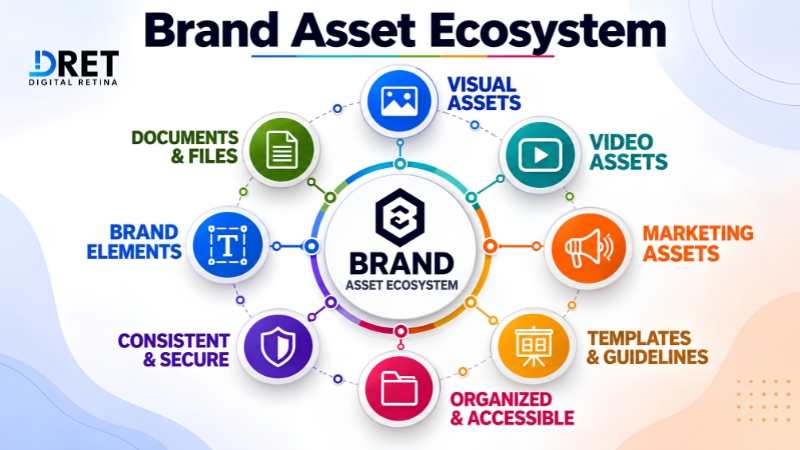
A strong brand isn't built around a single logo—it's built through a collection of recognizable assets working together. Every visual element, message, campaign, and customer experience shapes how people identify and remember your business. Understanding the different types of brand assets helps you create a consistent brand identity across every customer interaction, whether online or offline.
1. Visual Brand Assets
Visual brand assets are the elements people notice first. They create an immediate impression and make your business recognizable across different platforms.
Common visual brand assets include:
-
Company logo
-
Brand color palette
-
Typography and fonts
-
Icons
-
Photography style
-
Illustration style
-
Design system
When these elements remain consistent, customers begin associating them with your business, even before reading your company name.
Example
Apple is a great example of strong visual branding. Its minimalist logo, clean layouts, premium product photography, and consistent use of white space create a distinctive identity that customers recognize across its website, stores, packaging, and advertising.
2. Verbal Brand Assets
A brand isn't recognized only by how it looks—it's also recognized by how it communicates.
Verbal brand assets define your personality through language and ensure every message feels familiar, regardless of where customers interact with your business.
Examples include:
-
Brand name
-
Tagline
-
Brand voice
-
Messaging framework
-
Mission statement
-
Product naming
-
Customer communication style
-
Editorial guidelines
A consistent tone of voice makes your brand feel more authentic and helps build stronger customer relationships over time.
Example
Nike's famous "Just Do It" tagline has become one of its strongest brand assets. Combined with motivational messaging and inspiring storytelling, it reinforces the brand's identity far beyond its products.
3. Campaign and Marketing Assets
Campaign assets are created for specific marketing initiatives. While they follow your brand guidelines, they're designed to support promotions, product launches, seasonal campaigns, lead generation, or brand awareness activities.
Unlike your permanent brand identity, campaign assets may change from one initiative to another while still maintaining a consistent visual style.
Examples include:
-
Landing pages
-
Email campaigns
-
Display ads
-
Webinar presentations
-
Event branding
-
Promotional banners
-
Lead magnets
-
Sales presentations
Successful businesses don't redesign their identity for every campaign. Instead, they adapt existing brand assets to create campaigns that feel fresh while remaining instantly recognizable.
4. Digital Brand Assets
Unlike campaign assets, which are temporary and tied to specific marketing goals, digital brand assets are your always-on branded properties. These are the channels customers return to repeatedly to learn about your business, interact with your content, or make a purchase.
Examples include:
-
Business website
-
Mobile application
-
Customer portal
-
Social media profiles
-
Online knowledge base
-
Branded videos
-
Interactive tools
-
Digital brochures
Because these assets are continuously available, they should consistently reflect your brand identity through design, messaging, and user experience.
5. Physical Brand Assets
Even in a digital-first world, physical interactions continue to influence customer perception.
Whenever customers receive a product, visit an office, attend an event, or interact with printed materials, they're experiencing your brand through physical assets.
Examples include:
-
Product packaging
-
Business cards
-
Office signage
-
Store design
-
Employee uniforms
-
Promotional merchandise
-
Product labels
-
Trade show displays
Well-designed physical brand assets create memorable experiences and reinforce the identity customers have already encountered online.
Real-World Examples of Strong Brand Assets
Understanding brand assets becomes much easier when you see them in action. The world's most recognizable brands don't rely on a single logo—they combine multiple assets to create a consistent and memorable identity.
|
Brand |
Recognizable Brand Assets |
|
Nike |
Swoosh logo, "Just Do It" tagline, bold typography, motivational storytelling |
|
McDonald's |
Golden arches, red-and-yellow color palette, restaurant design, Happy Meal packaging |
|
Coca-Cola |
Signature red color, Spencerian script logo, contour bottle, consistent packaging |
|
Apple |
Minimalist logo, clean product design, premium packaging, simple brand voice |
Notice that each brand combines visual identity, messaging, packaging, and customer experience. Customers recognize these businesses because the same brand assets appear consistently across websites, advertising, products, stores, and digital platforms.
This consistency is what transforms individual design elements into valuable long-term brand assets.
Tangible vs. Intangible Brand Assets
Not every brand asset is something customers can see or touch. Some create immediate visual recognition, while others influence how people think and feel about your business.
Understanding this distinction helps businesses build a stronger brand because long-term success depends on both visible identity and customer perception.
Tangible Brand Assets
Tangible brand assets are the physical or visible elements customers interact with directly.
These include:
-
Logo
-
Brand colors
-
Typography
-
Product packaging
-
Marketing materials
-
Business stationery
-
Store signage
-
Social media graphics
These assets create consistency across every interaction and help customers identify your business quickly.
Intangible Brand Assets
Intangible brand assets aren't physical, but they often become the most valuable part of a brand over time.
These include:
-
Brand reputation
-
Customer trust
-
Brand personality
-
Company values
-
Customer experience
-
Emotional connection
-
Industry credibility
-
Brand perception
Unlike a logo or packaging, these assets can't be designed overnight. They're earned through consistently delivering positive customer experiences, quality products or services, and reliable communication.
Why Both Matter
Many businesses invest heavily in designing logos, websites, and marketing materials but overlook the experiences that shape customer perception.
In reality, tangible and intangible brand assets work together.
Your visual identity may attract someone's attention, but your reputation, customer service, and overall experience determine whether they remember your brand and recommend it to others.
For example, two businesses might have equally professional logos and websites. However, the business known for excellent customer support and reliable service will likely build stronger brand equity because customers associate its visual identity with positive experiences.
The most successful brands don't focus on creating attractive assets alone - they create consistent experiences that strengthen the meaning behind those assets over time.
Bottom Line
Strong brand assets are much more than design elements. They combine visual identity, messaging, marketing campaigns, digital experiences, and customer perceptions to create a brand that people recognize, trust, and remember. Businesses that invest in both tangible and intangible assets are better positioned to build lasting brand equity and stand out in increasingly competitive markets.
Why Are Brand Assets Important?
A memorable brand isn't built through one successful marketing campaign - it grows through consistent experiences over time. Every advertisement, website visit, customer conversation, product package, and social media interaction shapes how people perceive your business.
Strong brand assets ensure those experiences feel connected. Instead of creating separate impressions across different channels, they reinforce the same identity, making your business easier to recognize, trust, and remember.
Here are the key reasons why brand assets matter.
Improve Brand Recognition
Customers encounter thousands of marketing messages every day. Distinctive brand assets help your business stand out by creating familiar visual and verbal cues that people quickly associate with your company.
When customers repeatedly see the same logo, colors, typography, messaging, and design style, your brand becomes easier to recognize—even without displaying your business name prominently.
Greater recognition often leads to increased brand recall, making customers more likely to think of your business when they're ready to make a purchase.
Build Customer Trust
Consistency creates confidence.
Imagine visiting a company's website with modern branding, only to find outdated logos and completely different messaging on its social media profiles. These inconsistencies can make customers question the business's professionalism and credibility.
Strong brand assets eliminate that confusion by presenting a unified identity across every interaction. Whether someone discovers your business through your website, email newsletters, advertisements, or product packaging, they should experience the same brand personality and visual identity.
Over time, this consistency builds trust—and trust influences purchasing decisions.
Strengthen Marketing Performance
Every marketing campaign becomes more effective when it builds on an already recognizable identity.
Instead of introducing a new visual style for every advertisement or promotion, successful businesses reuse their core brand assets across campaigns. This creates familiarity, helping customers recognize the business faster and making marketing messages more memorable.
A consistent identity also reduces creative inefficiencies because marketing teams work from established brand guidelines rather than reinventing designs for every campaign.
Create a Competitive Advantage
Products and services can often be copied, but a recognizable brand is much harder to replicate.
Strong brand assets communicate your personality, values, and positioning in ways competitors can't easily imitate. They help customers distinguish your business even when multiple companies offer similar products or services.
Over time, this differentiation becomes a significant competitive advantage.
Increase Brand Equity
Every positive customer experience adds value to your brand.
As customers repeatedly associate your logo, messaging, packaging, and customer experience with quality and reliability, those assets become symbols of trust rather than just design elements.
This accumulated value is known as brand equity.
Businesses with strong brand equity often enjoy:
-
Higher customer loyalty
-
More referrals
-
Better customer retention
-
Greater pricing flexibility
-
Stronger long-term business value
Brand equity isn't created overnight—it develops through the consistent use of well-managed brand assets.
How Brand Assets Support AI Search Visibility
Search is changing rapidly. People no longer rely only on traditional search engines—they increasingly use AI-powered search experiences and conversational assistants to discover businesses, compare products, and answer questions.
This shift makes brand consistency more important than ever.
AI systems analyze information from multiple trusted sources to understand businesses and determine whether they can confidently reference or recommend them. While no single branding element guarantees visibility, consistent brand assets help reinforce your identity across the web.
For example, using the same:
-
Business name
-
Logo
-
Brand messaging
-
Author information
-
Website branding
-
Company descriptions
-
Social media identity
across all digital channels makes it easier for search engines and AI systems to recognize your business as a consistent entity.
Think of your brand assets as trust signals. The more consistently they appear across your online presence, the easier it becomes for both customers and AI-powered search platforms to connect that information back to your brand.
How to Create Strong Brand Assets
Recognizable brand assets aren't created by choosing attractive colors or designing a memorable logo alone. They result from strategic planning, a deep understanding of your audience, and consistent execution across every customer interaction.
Here's a practical process businesses can follow.
1. Research Your Audience and Competitors
Every successful brand starts with understanding its audience.
Research:
-
Customer needs
-
Buying behavior
-
Industry trends
-
Competitor positioning
-
Customer expectations
This research helps identify opportunities to create a distinctive identity instead of blending in with competitors.
2. Define Your Brand Identity
Before designing any visual elements, define what your business stands for.
Ask questions such as:
-
What is our mission?
-
What values guide our business?
-
What problems do we solve?
-
What makes us different?
-
How should customers describe our brand?
Your answers should guide every branding decision that follows.
3. Build a Consistent Visual Identity
Once your brand strategy is clear, create visual assets that work together as a unified system.
This includes:
-
Logo
-
Color palette
-
Typography
-
Iconography
-
Photography style
-
Graphic elements
-
Layout principles
Rather than designing each element independently, ensure they reinforce the same personality and positioning.
4. Establish Your Brand Voice
Visual consistency is only part of branding.
Customers also recognize businesses through their communication style.
Decide how your business should sound across:
-
Website content
-
Blog articles
-
Social media
-
Email campaigns
-
Advertisements
-
Customer support
Whether your tone is professional, approachable, authoritative, or conversational, consistency strengthens recognition.
5. Create Clear Brand Guidelines
As your business grows, multiple people may create content and marketing materials.
A comprehensive brand style guide should document:
-
Logo usage
-
Approved colors
-
Typography
-
Image style
-
Messaging guidelines
-
Tone of voice
-
Design standards
Clear guidelines reduce inconsistencies and help everyone represent the brand correctly.
6. Review and Refine Regularly
Brands evolve over time.
Review your brand assets periodically to ensure they still reflect your business goals, customer expectations, and market positioning.
Small updates made consistently are often more effective than complete rebrands every few years.
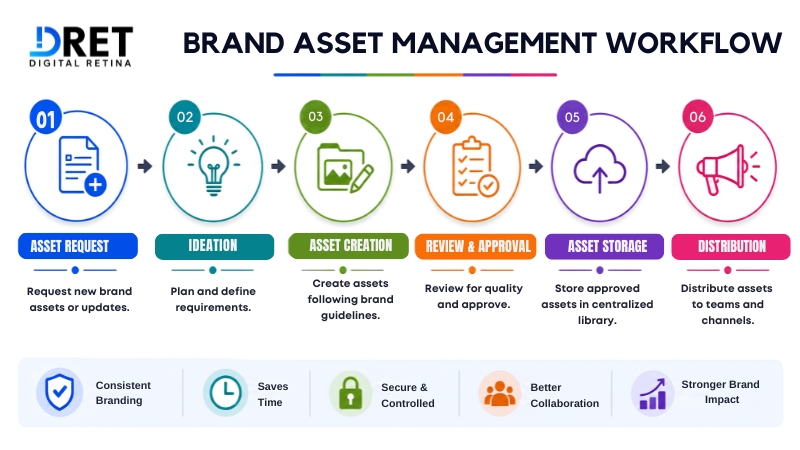
What Is Brand Asset Management (BAM)?
Creating great brand assets is only the first step. As businesses grow, so does the number of logos, templates, campaign materials, presentations, product images, videos, and marketing resources they produce.
Without a structured system, teams often waste time searching for files or accidentally use outdated branding. Over time, these inconsistencies can weaken brand recognition and create confusion for customers.
Brand Asset Management (BAM) is the process of organizing, storing, updating, and governing all approved brand assets from a centralized location.
Instead of scattered folders and duplicate files, businesses maintain a single source of truth that everyone can access.
A well-organized brand asset library typically includes:
-
Logo files
-
Brand guidelines
-
Typography
-
Color palettes
-
Marketing templates
-
Product images
-
Videos
-
Social media graphics
-
Presentation templates
-
Campaign resources
For growing organizations, BAM improves collaboration, reduces branding errors, and ensures every team represents the business consistently.
Protecting and Managing Brand Assets
Creating strong brand assets is only the beginning. To deliver long-term value, they must also be protected, updated, and used consistently across every part of the business.
As organizations grow, multiple teams, agencies, and partners often create marketing materials simultaneously. Without clear governance, it's easy for outdated logos, incorrect colors, inconsistent messaging, or unauthorized templates to appear across customer-facing channels. Even small inconsistencies can weaken brand recognition and reduce customer trust.
A practical brand asset strategy combines protection with day-to-day management.
Protect Your Brand Assets
Protecting your brand assets helps preserve your brand identity and reduces the risk of misuse.
Consider these best practices:
-
Register trademarks for important brand elements, such as your business name and logo, where applicable.
-
Store master logo files, fonts, and templates in a secure, centralized location.
-
Limit editing permissions so only authorized team members can modify core brand assets.
-
Review marketing materials before publication to ensure they follow brand guidelines.
-
Remove outdated assets after rebranding or major design updates.
-
Train employees, freelancers, and agency partners on correct brand usage.
These steps help ensure customers always experience the same trusted brand, regardless of where they interact with your business.
Manage Brand Assets Effectively
Good brand management isn't about storing files—it's about making approved assets easy to find and simple to use.
A few practical habits can make a significant difference:
-
Maintain a centralized brand asset library that serves as the single source of truth.
-
Standardize templates for presentations, social media graphics, email campaigns, and marketing materials.
-
Schedule regular brand audits to identify outdated or inconsistent assets.
-
Review and update brand guidelines whenever your visual identity or messaging evolves.
-
Monitor how different teams and external partners use your brand assets to ensure consistency.
Businesses that manage their brand assets proactively spend less time correcting branding mistakes and more time building a recognizable brand.
Measuring Brand Asset Performance
Creating brand assets isn't enough - you also need to understand whether they're being used effectively.
Regularly measuring performance helps identify inconsistencies before they affect customer perception.
Some useful indicators include:
-
Brand consistency: Are approved logos, colors, and messaging being used across all channels?
-
Asset adoption: Are employees, agencies, and partners using the latest approved assets?
-
Customer recognition: Do customers easily recognize your brand without seeing your company name?
-
Branded search growth: Are more people searching specifically for your business or brand name over time?
-
Asset usage data: Which templates, images, or resources are used most frequently?
-
Brand audits: Are outdated assets still appearing on websites, presentations, or marketing materials?
Monitoring these metrics helps businesses improve brand consistency, streamline collaboration, and ensure their brand assets continue supporting long-term growth rather than creating confusion.
Key Takeaway
Building strong brand assets is an ongoing process rather than a one-time branding project. By combining strategic planning, consistent execution, effective asset management, and regular performance reviews, businesses can create a recognizable identity that supports customer trust, stronger marketing performance, and sustainable long-term growth.
Common Mistakes to Avoid
Even businesses with strong branding can unintentionally weaken their identity through inconsistent execution.
Here are some of the most common mistakes:
-
Frequently changing logos, colors, or typography without a clear branding strategy.
-
Using multiple versions of the same logo across different channels.
-
Allowing different teams to create marketing materials without following brand guidelines.
-
Treating every digital file as a brand asset instead of identifying which assets truly represent the brand.
-
Ignoring customer experience as part of branding.
-
Failing to update or retire outdated marketing assets.
-
Not documenting brand standards for employees and external partners.
Avoiding these mistakes helps preserve the value of your brand assets over time.
Frequently Asked Questions
What are brand assets?
Brand assets are the distinctive visual, verbal, and experiential elements that help customers recognize and remember a business. They include logos, brand colors, typography, packaging, brand voice, websites, and other elements that consistently represent a company's identity.
Why are brand assets important?
Brand assets improve recognition, strengthen customer trust, create a consistent brand experience, support marketing performance, and contribute to long-term brand equity.
Are brand assets the same as digital assets?
No. Digital assets include files such as presentations, videos, PDFs, and images. Brand assets specifically represent your business identity and are designed to build recognition and consistency across customer interactions.
What is Brand Asset Management (BAM)?
Brand Asset Management (BAM) is the process of organizing, storing, updating, protecting, and governing approved brand assets so everyone in an organization uses consistent branding.
Can small businesses benefit from brand assets?
Absolutely. Even simple assets such as a professional logo, consistent colors, typography, and a clear brand voice can help small businesses appear more credible, memorable, and competitive.
How often should brand assets be reviewed?
Most businesses should review their brand assets at least once a year or whenever there is a significant business change, such as a rebrand, product launch, merger, or new marketing strategy. Regular reviews help ensure branding remains accurate and consistent across all channels.
Final Thoughts
Strong brand assets do more than make your business look professional—they help customers recognize, trust, and remember your brand across every interaction. From your logo and messaging to your website and customer experience, consistency strengthens your identity and builds long-term brand value.
As AI-powered search and digital marketing continue to evolve, maintaining clear and well-managed brand assets is more important than ever. By investing in a consistent brand identity today, you'll build stronger customer trust, improve marketing effectiveness, and create a foundation for sustainable business growth.
Ready to Implement These Strategies?
Our team of digital marketing experts can help you navigate these trends and create a winning strategy.