
Author: Abhishek Singh | SEO & CRO Consultant | 6+ Years of Experience
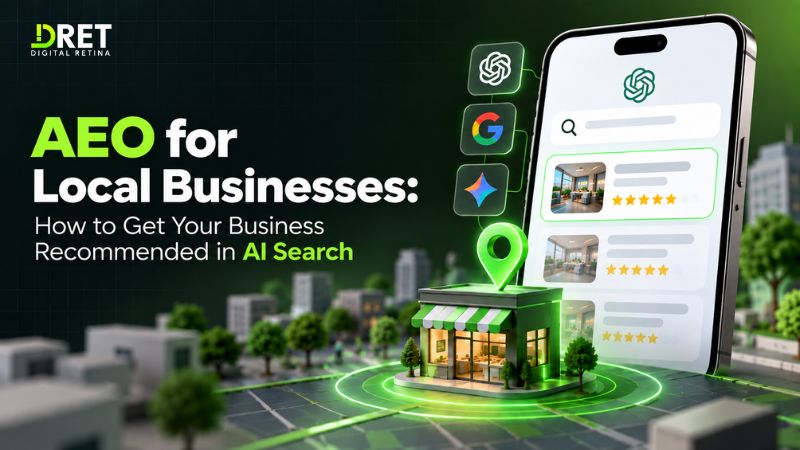
When customers ask AI platforms which local business they should choose, the answer may depend on more than traditional keyword rankings. They may ask for a trusted dentist nearby, an emergency plumber in their area, or a highly rated restaurant suitable for families.
Answer Engine Optimization gives AI search systems the context they need to understand a local business, including what it does, where it operates, who it serves, and why customers may trust it.
The goal is to build the information and authority signals that make a business relevant when AI systems answer location-based questions. No strategy can guarantee that a specific business will be recommended.
What Is AEO for Local Businesses?
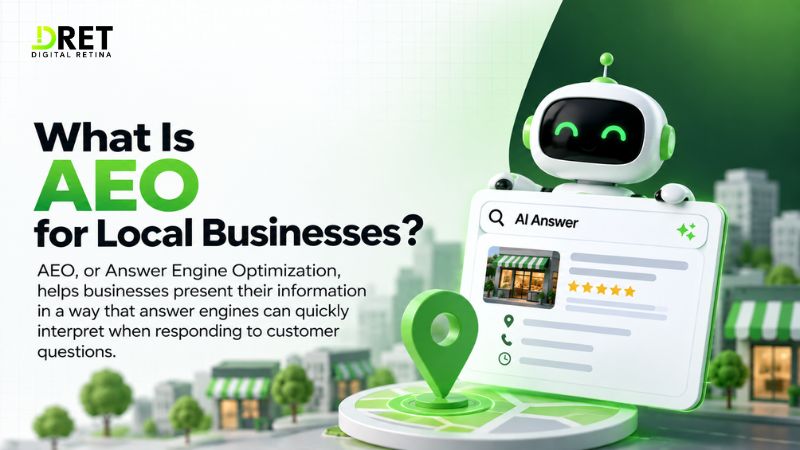
AEO, or Answer Engine Optimization, helps businesses present their information in a way that answer engines can quickly interpret when responding to customer questions.
For local businesses, this means connecting useful answers with accurate business details, service pages, location information, reviews, local references, and clear evidence of expertise.
AEO works alongside local SEO rather than replacing it. Google says local results are primarily influenced by relevance, distance, and prominence, while complete and accurate Business Profile information helps Google understand and match businesses to relevant searches, per Google's guidance.
The practical objective is simple: make your business easy to understand, easy to verify, and useful to mention.
How Is Local AEO Different From Traditional Local SEO?
Traditional local SEO focuses heavily on improving visibility in local organic results and Google Maps. Local AEO adds another layer by considering how clearly your business can answer the specific questions customers ask conversationally.
For example:
Traditional local search:
“Best physiotherapist in Noida”
AI local search:
“Which physiotherapy clinic in Noida is suitable for someone recovering from a sports injury?”
The second question requires more context. An AI system needs to understand the services offered, location, specialization, customer needs, and supporting evidence.
That means your website should provide useful information that answers real customer questions rather than relying only on location-based keywords.
Why Does AI Search Matter for Local Businesses?
AI search allows people to research, compare, and ask for recommendations conversationally. Platforms such as ChatGPT, Gemini, Perplexity, and Google's AI-powered search experiences can synthesize information from multiple sources.
Forbes reported research conducted by Lutz Finger with Cornell master's students in which AI-guided search experiences produced conversion rates nearly 9 times higher than traditional search in their tests. That finding is not a local-business benchmark, but it illustrates why businesses should pay attention to high-intent AI discovery.
For a local business, the opportunity appears when customers ask questions such as:
-
“Who is the best family lawyer near me?”
-
“Which dental clinic offers emergency appointments?”
-
“Find a reliable home cleaning company in Noida.”
-
“Which restaurants nearby are good for a family dinner?”
-
“What are the top physiotherapy clinics for back pain?”
The business that is clearly represented across relevant digital sources has a better foundation for being understood when these questions are asked.
7 Ways to Improve Local AI Search Visibility
1. Make Your Business Information Consistent Everywhere
Keep your business name, address, phone number, website, hours, categories, services, and service areas accurate across important online platforms.
Google recommends claiming and managing your Business Profile so you can provide accurate business information that appears across Google Search and Maps, according to Google's guidance.
Review your information across:
-
Google Business Profile
-
Website contact and location pages
-
Bing Places
-
Relevant local directories
-
Industry-specific directories
-
Social profiles
-
Major review platforms
Consistency helps reduce ambiguity about the business entity that search systems are trying to understand.
2. Create Pages That Directly Answer Local Customer Questions
Build service and location content around the questions customers ask before choosing a local provider. Put a concise answer first, then provide supporting details, examples, and next steps.
For example, a dental clinic could address the following questions:
Do you provide emergency dental treatment?
Yes, our clinic provides emergency dental consultations for urgent dental problems such as severe tooth pain, broken teeth, dental injuries, and other situations that require prompt professional assessment. Patients should contact the clinic directly to confirm same-day availability and the appropriate treatment option.
Do you treat children?
Yes, a family dental practice can clearly state whether it provides pediatric or child-friendly dental care, what age groups it accepts, and which treatments are available. Adding this information to the relevant service page helps customers understand whether the practice fits their needs.
Do you offer weekend appointments?
If weekend appointments are available, state the exact days and hours on the website and Business Profile. If availability varies, explain how customers can confirm an appointment. Clear scheduling information is more useful than simply claiming that the practice has flexible hours.
How much does an initial consultation cost?
If your business publishes consultation pricing, provide the current fee and explain what it includes. If pricing depends on the service or assessment, say so clearly and explain how customers can request an accurate estimate.
Where is the clinic located?
Provide the complete address, nearby landmarks where useful, service area, contact number, and a map or directions link. The same location information should remain consistent across your website, Business Profile, and relevant external listings.
HubSpot recommends putting the core answer within the first 40–60 words and making individual sections understandable on their own. This is particularly useful for answer-first content designed to be extracted or summarized.
3. Strengthen Local Service and Location Signals
Tell search systems exactly where you operate, which customers you serve, and which services are available at each location.
A useful local page should explain:
-
Location: Where the business is physically located
-
Service area: Which nearby areas it serves
-
Services: What customers can get at that location
-
Audience: Who the service is designed for
-
Access: How customers can contact or visit the business
-
Local relevance: Specific needs or situations the business handles
For multi-location companies, create genuinely useful location pages with unique information. Avoid producing dozens of pages that simply replace one city name with another.
4. Use Genuine Customer Reviews as Reputation Signals
Encourage genuine customers to share accurate experiences instead of trying to manufacture keyword-rich reviews.
A useful review may explain what service the customer received, what problem was addressed, or what aspect of the experience they valued.
Google states that prominence is one factor in local results and that review information contributes to understanding a business's prominence, according to Google's local ranking guidance.
Reviews should remain authentic. Do not pay for reviews, create fake reviews, or pressure customers to include specific keywords.
5. Build Evidence Beyond Your Own Website
Support your business claims with credible third-party information, professional profiles, local publications, industry directories, reviews, and relevant associations.
For example:
-
Law firms: Professional associations, legal directories, local media
-
Healthcare practices: Professional profiles, recognized directories, credentials
-
Restaurants: Reputable food publications, local guides, review platforms
-
Home-service companies: Industry profiles, local publications, established directories
The aim is to establish genuine authority around the business. In my own SEO and CRO work, I have found that strong local visibility becomes much easier to defend when the business information is consistent across its website, profiles, reviews, and other relevant sources rather than concentrated on a single page.
6. Make Your Expertise Easy to Understand
Explain who runs the business, what qualifications they have, how much experience they have, and which customer problems they are equipped to solve.
This is particularly important for businesses where trust influences the decision, including healthcare, legal services, education, financial services, professional consulting, and specialist home services.
Instead of making broad claims such as “We are the best,” provide evidence:
-
Credentials
-
Years of relevant experience
-
Professional memberships
-
Areas of specialization
-
Author or practitioner information
-
Relevant case experience
-
Original educational content
Specific evidence gives both customers and search systems more context.
7. Use Structured Data and Keep Your Website Accessible
Use structured data to clearly describe information already present on your pages, and keep important business content accessible to search crawlers.
For relevant local pages, businesses can consider structured data such as:
-
LocalBusiness: Business identity, address, phone, hours, and other applicable details
-
Service: Information describing a service offered by the business
-
Review: Genuine review information where applicable and compliant with Google's guidelines
-
FAQPage: Structured FAQ content when the page and implementation meet Google's requirements
-
BreadcrumbList: Page hierarchy and navigation context
Google says structured data helps it understand page content and provides specific guidance for LocalBusiness markup. Google also notes that structured data does not guarantee a particular search appearance, according to its structured data documentation.
For local businesses, use the most specific appropriate LocalBusiness subtype where possible and ensure the marked-up information matches visible page content, as recommended by Google.
Reviews require particular care. Google has specific restrictions around self-serving review markup for local businesses, so businesses should not add review schema simply to manufacture star-result eligibility.
How Does Voice Search Fit Into Local AEO?
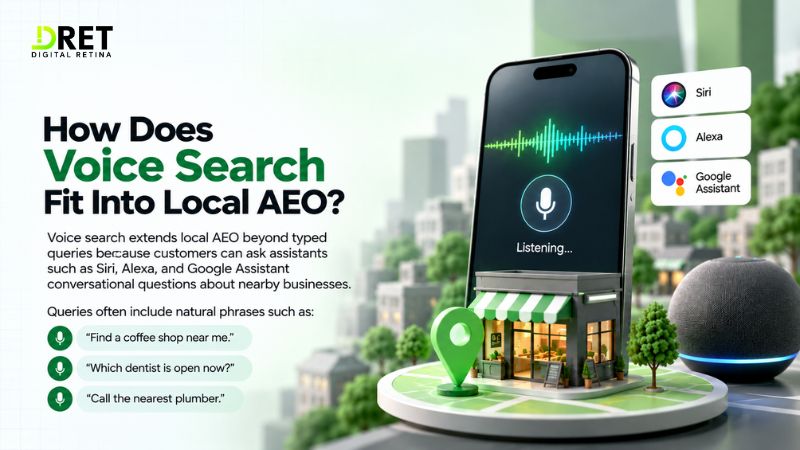
Voice search extends local AEO beyond typed queries because customers can ask assistants such as Siri, Alexa, and Google Assistant conversational questions about nearby businesses.
Queries often include natural phrases such as:
-
“Find a coffee shop near me.”
-
“Which dentist is open now?”
-
“Call the nearest plumber.”
-
“Where can I get an emergency appointment?”
Accurate business information, clear service descriptions, location details, opening hours, and conversational question-and-answer content can make your digital presence more useful for these discovery experiences.
Local AEO should therefore consider the broader local search ecosystem, including maps, voice assistants, traditional search, and AI answer platforms.
What Information Should a Local Business Make Easy for AI to Understand?
A practical answer engine optimization for local businesses strategy can be organized around five information layers:
|
Information layer |
What AI should understand |
|
Business |
Who you are and what you do |
|
Location |
Where you operate and which areas you serve |
|
Services |
What you offer and who it is for |
|
Expertise |
Why customers can trust your business |
|
Evidence |
Reviews, credentials, mentions, and supporting sources |
When these signals are accurate and consistent, your business becomes easier for search systems and AI platforms to interpret.
Can AEO Guarantee a Recommendation in ChatGPT or Gemini?
No. AEO cannot guarantee that ChatGPT, Gemini, Perplexity, or another AI platform will recommend your business.
AI responses can vary based on the query, location, available information, user context, platform, and underlying systems. Even structured data has no guaranteed search-result outcome according to Google.
A stronger strategy is to improve the signals that establish relevance and trust: clear business information, useful answers, local authority, genuine reputation, and consistent supporting evidence.
How Should You Measure Local AEO Performance?
Measure local AEO through AI mentions, citations, competitive visibility, referral traffic, and business outcomes rather than relying only on traditional keyword rankings.
Track:
-
AI mentions: How often your business appears for relevant prompts
-
Citations: Which sources AI systems use when discussing your business
-
Competitors: Which businesses appear instead of you
-
Services: Which services AI associates with your business
-
Locations: Whether your business appears for relevant local areas
-
Referral traffic: Visits from AI platforms
-
Leads: Enquiries influenced by AI discovery
-
Local visibility: Organic and map performance alongside AI visibility
HubSpot reports that its own AEO strategy generated stronger qualified-lead performance and recommends measuring visibility through mentions, citations, and competitive positioning rather than clicks alone.
The exact numbers will differ by business, industry, market, and tracking setup, so AI visibility should ultimately be connected to qualified leads and revenue.
Local AEO Checklist for Businesses
Before investing heavily in AI search optimization, check the fundamentals:
-
Business Profile: Complete, accurate, and verified
-
Business details: Consistent across important platforms
-
Services: Clearly explained on dedicated pages
-
Locations: Clearly defined without creating duplicate pages
-
Questions: Customer questions answered directly
-
Reviews: Genuine and relevant customer feedback
-
Expertise: Credentials, experience, and authorship visible
-
Authority: Relevant third-party mentions and references
-
Structured data: Appropriate schema implemented accurately
-
Technical SEO: Website crawlable, indexable, mobile-friendly, and well structured
-
Voice readiness: Business hours, location, contact, and services easy to find
-
Monitoring: AI mentions, citations, traffic, leads, and competitors tracked
Frequently Asked Questions About Local AEO
What is AEO for local businesses?
AEO for local businesses helps make business content and information easier for AI search and answer engines to understand when customers ask location-based questions. It combines useful answers, local relevance, business information, reputation signals, authority, and technical accessibility.
Can AEO help my business appear in ChatGPT?
AEO can improve the quality and consistency of the information available about your business, but it cannot guarantee a ChatGPT recommendation. AI platforms make their own decisions about which information to use and which businesses to mention.
Does AEO replace local SEO?
No. AEO builds on local SEO rather than replacing it. Accurate Business Profile information, local relevance, prominence, useful website content, and strong technical foundations remain important for local search visibility, according to Google's guidance.
Does structured data make a business appear in AI answers?
Structured data helps search engines understand specific information on a webpage, but it does not guarantee inclusion in AI-generated answers or a particular search result. It should accurately describe visible, relevant information on the page.
How long does local AEO take to work?
There is no fixed timeline for local AEO. Results depend on the strength of the existing website, local authority, business information, competition, content quality, and how quickly search systems discover and process changes.
Final Takeaway
Local AEO is about building a digital presence that gives AI systems enough clear, reliable context to understand your business and its relevance to local customer questions.
Traditional local SEO remains the foundation. Google continues to consider relevance, distance, and prominence for local results, while accurate Business Profile information helps establish the business's identity and location.
Ready to Implement These Strategies?
Our team of digital marketing experts can help you navigate these trends and create a winning strategy.