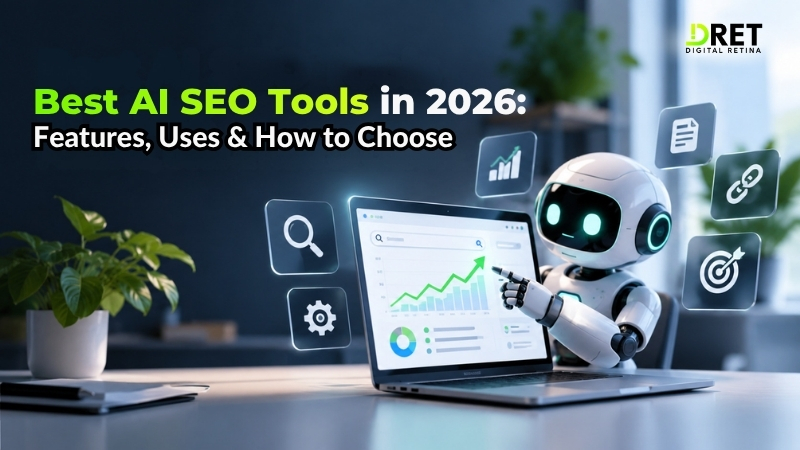

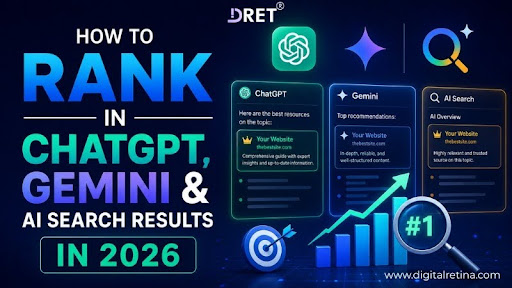
The way organic search works is changing. SEO today is not the same as it was earlier, and relying only on traditional methods is no longer enough.
Platforms like ChatGPT and Gemini are becoming a preferred way to search. Users are no longer interested in opening multiple websites. They want direct, structured answers that solve their query instantly.
If your SEO strategy is still focused only on keywords and backlinks, you are gradually losing visibility.
At Digital Retina, we are already seeing this shift across different industries. Content that performs well on Google does not always perform well in AI search.
In this blog, we will understand how AI search works and what you need to do to improve your presence in ChatGPT and Gemini results.
Understanding the Shift: From Traditional SEO to AI SEO
Earlier, Traditional SEO focused on ranking web pages using signals like keywords, backlinks, and page performance. These factors still matter, but they are no longer enough to secure visibility on their own.
With the rise of intelligent search experiences, user behavior has changed.
Today, people prefer asking a question and getting a clear, direct answer instantly. They no longer want to visit multiple websites, compare information, and then form a conclusion.
This is where AI SEO comes into play.
Instead of showing a list of links, modern search platforms generate a single, structured response by combining information from multiple sources. The goal is to provide the most accurate and helpful answer in the shortest time.
Because of this shift, your content is no longer competing just for rankings. It is competing to be selected, trusted, and included in the final answer that users see.
The Rise of Zero-Click Searches
Zero-click searches are increasing rapidly. This simply means users are getting their answers without clicking on any website.
You may have noticed this yourself. For simple queries, you read the AI overview or chatbot response and move on.
This behavior is becoming normal for:
- General information
- Quick comparisons
- Everyday queries
For more complex topics, users still visit websites. But for most searches, AI responses are enough.
From what we have observed across Digital Retina projects, informational content is the most affected. Traffic from such queries is gradually decreasing because users are not clicking through.
This makes it clear that optimizing for AI search is no longer optional.
Content Strategies to Rank in AI Search in 2026
Focus on Intent, Not Just Keywords
One of the biggest mistakes people still make is focusing too much on keywords.
AI does not work like a traditional search engine. It tries to understand the intent behind a query.
So instead of asking, “Which keyword should I target?”
You should ask, “What exactly is the user trying to understand?”
If your content answers that clearly, you already have an advantage.
Keep Your Content Simple and Structured
Most users do not like reading long and complex paragraphs. They prefer content that is easy to scan and understand.
This means you should:
- Break content into sections
- Use clear headings
- Keep paragraphs short
Well-structured content is easier for both users and AI systems to process.
Write Like You Speak
One major reason AI tools are popular is their tone. They feel natural and conversational.
Your content should reflect the same approach.
Avoid writing in a rigid or overly formal style. Instead, write like you are explaining something to a client or colleague.
This makes your content easier to understand and more likely to be picked up by AI systems.
Use Relevant Internal Linking
Content does not exist in isolation. AI systems evaluate how well your content connects with other relevant information.
Instead of adding links randomly, focus on linking related topics naturally.
For example, if you are talking about AI SEO, you can connect it with related discussions around digital marketing trends or local SEO strategies.
This improves the overall context of your content and helps AI understand your expertise better.
Keep Your Content Updated
Outdated content loses relevance quickly, especially in AI-driven search.
If your content includes old data or outdated examples, it becomes less reliable.
Updating your content regularly helps maintain accuracy and improves your chances of being used in AI-generated answers.

What We Observed at Digital Retina
From our internal work, one thing is clear.
Content that performs well in AI search is not necessarily the most optimized content. It is the most useful content.
We saw better results when content included:
- Real examples
- Clear explanations
- Simple structure
Here is a quick snapshot:
| Category | Before | After Optimization | Growth |
| Healthcare | Rank 18 | Rank 6 | +72% |
| Ecommerce | Rank 22 | Rank 9 | +54% |
| Local Services | Rank 15 | Rank 5 | +81% |
This shows that improving content quality directly impacts visibility and results.
Way Forward
If you want to rank in ChatGPT and Gemini, you need to change your approach.
Stop focusing only on how to rank.
Start focusing on how to explain better.
The goal is simple—create content that answers a question clearly, without forcing the user to search further.
That is exactly what AI systems are designed to deliver.
FAQs
What type of content performs best in AI search?
Content that is clear, structured, and focused on solving user queries performs best.
Does AI search reduce website traffic?
Yes, especially for informational queries. However, detailed and high-intent topics still bring traffic.
Is AI SEO the future?
AI SEO is already part of the present. Businesses that adapt early will have a strong advantage.
Call to Action
If you want to improve your visibility in AI search and build a future-ready SEO strategy:
👉 Book a consultation: https://digitalretina.in/ai-seo-audit
Final Thoughts
AI search is not replacing SEO, but it is changing how SEO works.
To stay relevant, you need to adapt your strategy.
Focus on clarity, structure, and usefulness. Combine traditional SEO with AI-focused content, and you will be able to maintain visibility across both platforms.
Ready to Implement These Strategies?
Our team of digital marketing experts can help you navigate these trends and create a winning strategy.