
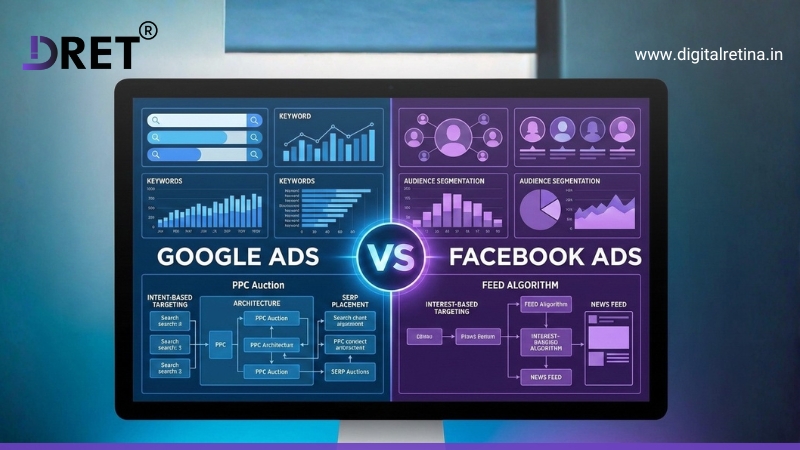
In 2026, Google Ads and Facebook Ads (Meta Ads) remain two of the most powerful digital advertising platforms, but they serve different purposes. Google Ads is highly effective for capturing high-intent users who are actively searching for products or services, making it ideal for lead generation and direct conversions. Its AI-driven bidding and automation help businesses maximize ROI from search, display, and YouTube campaigns.
On the other hand, Facebook Ads excels at brand awareness, audience targeting, and demand generation through engaging visual formats like Reels, Stories, and carousel ads. With advanced audience insights and lower entry costs, it’s especially effective for building interest and retargeting potential customers. Ultimately, the better platform in 2026 depends on your goals — Google Ads for intent-driven conversions, Facebook Ads for discovery and engagement. For best results, most brands benefit from using both together as part of a full-funnel strategy.
What are Google Ads?
Google Ads is Google’s paid advertising platform that allows businesses to promote their products and services across Google Search, YouTube, Google Display Network, Gmail, and partner websites. A well-planned Google Ads Strategy leverages intent-based targeting, ensuring ads are shown to users who are actively searching for solutions, making it highly effective for lead generation and conversions.
For example, when a user searches for keywords like “digital marketing company in Noida” or “Google Ads services near me,” businesses can appear at the top of search results instantly. This makes Google Ads one of the most reliable platforms for lead generation and sales in 2026. Google Ads supports multiple campaign types such as Search Ads, Display Ads, Video Ads, Shopping Ads, and Performance Max campaigns, allowing advertisers to reach users across different stages of the buyer journey.

Advantages of Using Google Ads
Google Ads remains a top-performing advertising channel in 2026 because it targets users at the exact moment they are searching for answers. This makes it a powerful tool for businesses that rely on immediate conversions. Key advantages include:
- High-intent traffic: Users already want a solution, increasing conversion probability
- Instant visibility: Even new websites can rank above organic results
- Flexible budget control: Advertisers can scale spend based on performance
- Local targeting: Ideal for location-based and service businesses
- Strong analytics: Detailed insights into keywords, calls, leads, and ROI
In the debate of google ads vs facebook ads, Google Ads is best suited for demand capture and fast results.
What are Facebook Ads?
To fully understand google ads vs facebook ads, it’s important to clearly define what is Facebook Ads. Facebook Ads, also known as Facebook Meta Ads, is a paid advertising system that allows businesses to promote content across Facebook, Instagram, Messenger, and Audience Network.
Unlike Google Ads, Facebook Ads is not intent-driven. Instead, it focuses on interest-based and behavior-based targeting. Advertisers use a Facebook ad account to reach users based on demographics, interests, online behavior, location, and past interactions. Facebook Ads is especially effective for introducing brands to new audiences, storytelling, and nurturing potential customers before they are ready to purchase.

Advantages of Using Facebook Ads
Facebook Ads offers unmatched flexibility and audience targeting, making it a preferred platform for brand growth in 2026. With the ability to reach users before purchase intent exists, Facebook Meta Ads plays a critical role in modern marketing funnels. Key advantages include:
- Advanced audience targeting: Interests, behaviors, lookalike audiences, and retargeting
- Creative freedom: Visual formats like video, carousel, reels, and stories
- Lower entry cost: Competitive Facebook ads cost for awareness and engagement
- Strong remarketing: Reconnect with website visitors and past customers
- Conversion-focused campaigns: Highly effective Facebook ads for conversions when optimized
A well-planned Facebook ad campaign focuses on education, trust-building, and consistency.
When to Use Google Ads vs. Facebook Ads?
Choosing between google ads vs facebook ads depends on your audience’s awareness level, buying intent, and overall sales cycle. Each platform performs best at different stages of the customer journey.
Use Google Ads when:
- Users are actively searching for your product or service
- You need immediate leads, calls, or online purchases
- Your offering solves an urgent or high-intent problem
- You want predictable, trackable, and conversion-focused results
- Your business relies on local, service-based, or B2B demand
Use Facebook Ads when:
- Your audience is unaware of your brand or still exploring options
- You want to educate, nurture, and influence potential customers
- Your product or service benefits from visual storytelling and demos
- You want scalable reach and long-term brand building
- You plan to use retargeting and audience-based marketing
In 2026, most performance-driven brands rely on both platforms together, using Facebook Ads to build demand and Google Ads to capture it at the right moment.
How to Use Google Ads and Facebook Ads Together?
The most successful advertising strategies in 2026 combine Google Ads and Facebook Ads into a single, full-funnel marketing system. Instead of relying on just one platform, businesses use Facebook Meta Ads to generate demand and Google Ads to capture high-intent traffic.Here’s how brands use both platforms together effectively:
- Launch Facebook Meta Ads to build brand awareness and reach cold audiences who are not actively searching yet
- Share educational videos, guides, testimonials, and offers to warm up users and build trust over time
- Retarget engaged users using Facebook ads for conversions to move them closer to a purchase decision
- Capture ready-to-buy users through Google Search Ads when they actively look for solutions
- Use remarketing on both platforms to stay visible across multiple touchpoints and reinforce brand recall
This integrated approach reduces dependency on a single channel, improves conversion rates, lowers customer acquisition costs, and delivers a higher overall ROI.
Google Ads vs. Facebook Ads FAQ
Which platform delivers faster results?
Google Ads delivers faster results because it targets users with immediate intent, while Facebook Ads builds demand over time.
Is Facebook advertising expensive in 2026?
Facebook ads cost varies by industry and competition. Awareness campaigns are usually affordable, while conversion-focused campaigns require testing and optimization.
How to create Facebook ads that convert?
Start by setting up a verified Facebook ad account, select the right objective, test creatives, and optimize with Meta Pixel and Conversion API.
What types of Facebook ads work best?
High-performing types of Facebook ads include video ads, carousel ads, lead ads, reels ads, and story ads.
Can beginners learn from Facebook ad examples?
Yes, analyzing proven Facebook ad examples helps understand creative structure, messaging, and CTA placement.
Final Thoughts
The discussion around google ads vs facebook ads is not about choosing a winner. Google Ads captures high-intent demand, while Facebook Meta Ads creates and nurtures that demand. In 2026, businesses that combine both platforms strategically achieve higher conversions, stronger brand authority, and sustainable growth.
At DRET, we help brands build data-driven advertising strategies that deliver measurable results across Google Ads and Facebook Ads.
Ready to Implement These Strategies?
Our team of digital marketing experts can help you navigate these trends and create a winning strategy.