
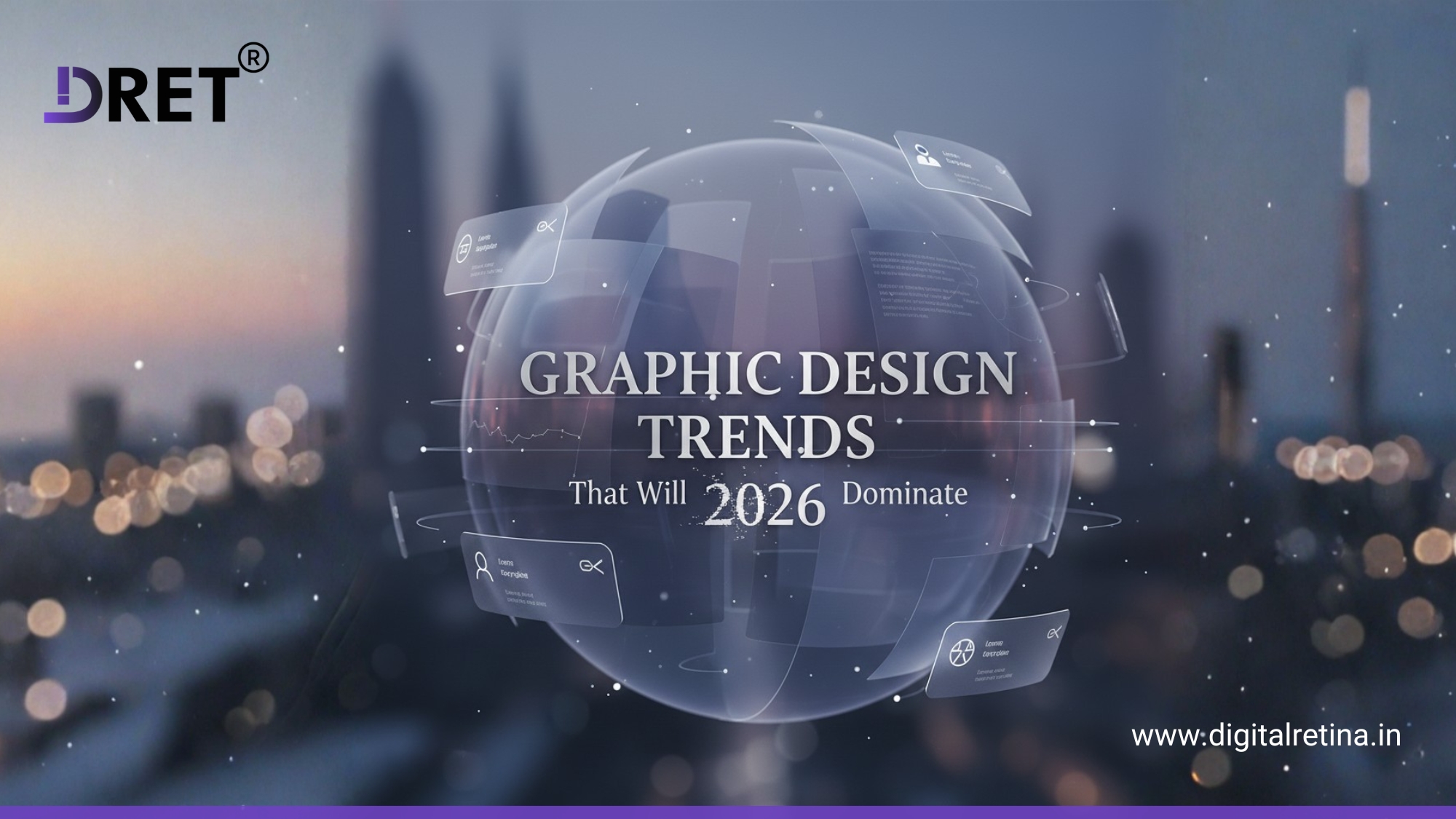
Graphic design in 2026 will be defined by a bold fusion of futuristic technology and human-centered creativity. As AI-generated visuals become more advanced, designers will shift toward hyper-personalized, emotionally driven design experiences that feel authentic and immersive. Trends like 3D realism, kinetic typography, brutalist minimalism, nostalgic retro palettes, and interactive AR-ready graphics will dominate brand identities, social media, and digital campaigns.
At the same time, sustainability-focused design and consciously simplified layouts will rise as brands prioritize clarity, accessibility, and eco-friendly storytelling. With the growing demand for high-quality Creative designing service, companies will focus on visuals that are not only modern but also meaningful. Overall, 2026 will be a year where innovation and purpose come together—giving designers more freedom to experiment, build memorable visual experiences, and set new standards for digital aesthetics.
1. AI-Driven Personalized Visuals
AI is transforming graphic design from static creativity to dynamic, intelligent visual communication. In 2026, brands will adopt AI-powered design systems that automatically customize visuals based on user behavior, interests, location, device, and even browsing history. With the rise of AI Content Marketing, these intelligent design systems will work hand-in-hand with automated content strategies to deliver hyper-personalized brand experiences. This approach helps brands create visuals that feel unique to every individual user. Instead of one design fitting everyone, AI generates multiple variations that adjust in real time—making the user feel understood, valued, and engaged. For digital marketers, this shift means stronger CTRs, higher ad effectiveness, and better conversion rates.
For example: A fitness brand’s banner may show weight loss content to a user searching for diets, while showing muscle gain visuals to someone researching gym routines.
Why this matters: AI-based designs increase relevance, reduce bounce rate, and deliver highly targeted communication. Brands can continuously test variations without spending hours on manual design. Marketing teams will treat creatives as “living assets” that evolve over time.

2. Soft Minimalism With Emotional Depth
Minimalism is not new, but 2026 brings an evolved, human-centric version of it. Instead of rigid, flat layouts, modern minimalism uses soft shadows, warm shades, subtle gradients and gentle transitions to create clean yet emotionally rich visuals. This design style aligns perfectly with brands that aim for a premium, modern image. It enhances readability, reduces visual noise, and builds instant trust—especially for technology, wellness, finance, and lifestyle brands. Key attributes include:
- smooth gradients
- soft shadows
- warm neutral tones
- organic spacing
- clean, breathable layouts
This style makes a brand feel modern, premium, and trustworthy. It also reduces cognitive load, improves usability, and enhances focus—making it ideal for finance, healthcare, tech, and lifestyle brands.

3. Hyper-Realistic 3D Branding
3D design is no longer experimental—it's becoming a mainstream branding language. With new 3D tools and faster rendering technologies, brands are using hyper-realistic 3D visuals to create immersive product stories and stunning digital experiences. In 2026, 3D elements will dominate website hero sections, digital product ads, packaging concepts, and interface illustrations. These visuals bring a cinematic quality that traditional flat graphics simply can’t match, helping brands stand out in crowded markets. Brands will use 3D for:
- Product visualizations (even before manufacturing)
- Website hero sections
- UI elements with depth
- AR and VR experiences
- Motion graphics
- Concept packaging
3D creates emotion, immersion, and memorability. It’s perfect for brands that want to look cutting-edge and premium.
4. Futuristic, Tech-Inspired Aesthetics
As AI, robotics, and metaverse innovations continue to rise, futuristic design themes are becoming a favorite for forward-looking brands. Expect more neon hues, holographic textures, metallic gradients, and cyberpunk-style lighting settings. This aesthetic is bold, expressive and carries a strong technological identity, making it ideal for IT companies, SaaS products, gaming brands, and innovative startups.
- Neon glows
- Holographic textures
- Metallic surfaces
- Cyberpunk-inspired color palettes
- Glitch visual effects
- Sci-fi typography
- Digital circuitry patterns
Tech startups, SaaS companies, gaming brands, cybersecurity firms, and digital product companies will adopt this style to express intelligence and forward-thinking energy.
5. Maximalist Visual Storytelling
Contrary to minimalism, maximalism brings dramatic colors, bold typography, layered textures, and expressive compositions. This trend caters to brands that want to convey personality, energy, and creativity without holding back.
In 2026, maximalist design will gain traction in fashion, entertainment, events, youth-oriented brands, and influencer marketing campaigns—where vibrance and individuality matter more than clean simplicity. When executed well, maximalism tells a powerful story in seconds.
- Dramatic color combinations
- Bold fonts
- Textured layers
- Artistic compositions
- Chaotic balance that still feels intentional
Maximalism is ideal for fashion, entertainment, events, youth brands, creative agencies, and influencers who want to stand out and build a strong, memorable identity.
6. Kinetic Typography & Motion-First Design
Motion design will dominate 2026 as attention spans continue shrinking. Kinetic typography—where text moves, flexes, expands or flows—creates an immediate emotional impact and holds user interest longer than static text. Brands will increasingly use motion typography in:
• Website banners
• Digital ads
• Product explainers
• Social media reels
• Onboarding screens
Motion makes content more memorable, playful, and shareable, giving brands an instant creative edge.
7. Organic, Nature-Inspired Visuals
Sustainable design is no longer a trend—it’s a global movement. In 2026, brands will embrace natural textures, botanical shapes, earthy palettes, and hand-drawn elements that create a calm, authentic, and nature-aligned brand identity.
This style works best for wellness brands, organic products, skincare, restaurants, eco-friendly businesses, and lifestyle brands that want to convey trust and emotional comfort.
8. Immersive Mixed-Media Artwork
Graphic design is moving beyond a single-medium format. Designers are blending photography, hand sketches, digital paint, 3D elements, and textured overlays to produce visually rich compositions that feel fresh and unforgettable.
Mixed-media art brings depth and personality to a design, making it ideal for creative brands, campaigns, product launches, and lifestyle marketing that needs a distinct visual signature.
9. Bold Retro Modernism
Retro design is making a comeback again in 2026—but with a modern twist. Instead of purely vintage looks, brands are combining retro color palettes, nostalgic shapes, and classic typography with contemporary layouts and digital-friendly visuals.
This creates a beautiful contrast of old and new, helping brands connect emotionally with diverse age groups—especially through websites, packaging, logos, and social campaigns.
10. Inclusive & Accessible Design
Accessibility is becoming a core requirement instead of an optional design feature. In 2026, brands will prioritize readability, color contrast, scalable typography, and inclusive imagery that considers all demographics and abilities.
This trend is powerful because it’s not just about aesthetics—it builds trust, empathy, and universal usability. Brands that embrace inclusive design naturally grow stronger, more loyal communities.
Final Thoughts
Graphic design in 2026 will be shaped by AI intelligence, emotional storytelling, immersive visuals, and inclusive experiences. Brands that adopt these trends early will create stronger digital identities, connect deeper with their audiences, and stand out in a competitive landscape.
At DRET, we help businesses stay ahead of design, branding, and marketing trends with future-ready creative solutions. If you want your brand to look premium, modern, and visually impactful in 2026—our design team can help you transform your entire identity.
Ready to Implement These Strategies?
Our team of digital marketing experts can help you navigate these trends and create a winning strategy.