Digital marketing between 2026 and 2030 will be defined by one thing—artificial intelligence controlling visibility. Search engines are no longer acting as directories of websites. Instead, they function as decision-making systems that evaluate brands, summarize information, and guide users toward trusted answers.
This means digital marketing teams must stop thinking only in terms of rankings and start focusing on recognition, authority, and relevance. Brands that adapt early to this shift in digital marketing will stay visible and competitive. Those that don’t will struggle, even if they continue to invest heavily in content or ads.
Understanding AI’s Role in Modern Search
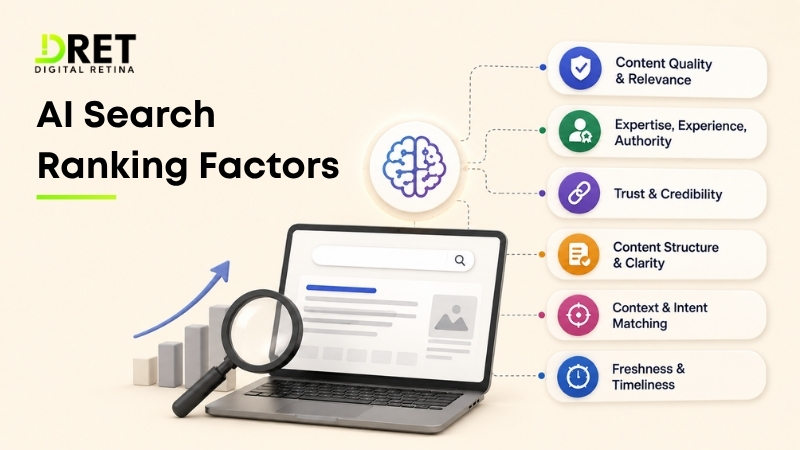
AI is now the foundation of how search engines interpret content, making AI SEO a critical part of modern digital marketing strategies. It doesn’t just read pages—it understands context, relationships, and intent behind every query. AI-driven search engines evaluate factors such as:
- Whether your content genuinely answers a user’s question in a complete and understandable way.
- If your brand consistently demonstrates subject-matter expertise across related topics.
- How trustworthy and authoritative your information appears when compared to competing sources.
- Whether your content aligns with real user intent rather than keyword assumptions.
In simple terms, modern AI systems don’t just rank pages based on signals—they recommend brands they trust. Visibility in future SERPs will depend less on technical tricks and more on how well your brand communicates knowledge, credibility, and value.
How SERPs Are Transforming (2026–2030)?
The traditional search engine results page is rapidly disappearing. In its place, AI-generated summaries, comparisons, and recommendations now appear at the top of results, shaping user decisions before they ever scroll. These summaries are designed to save time and reduce effort, which fundamentally changes how visibility works for brands. What this means in practice:
- Users are shown direct answers before organic results appear.
- Only a small set of trusted and authoritative sources are referenced by AI.
- Brand names are highlighted more often than individual page titles.
- Comparisons and recommendations are generated without users visiting multiple sites.
As a result, search visibility is no longer about ranking in a specific position. It’s about being included, recognized, and cited within AI-generated responses. Brands that earn AI trust gain exposure across multiple queries, while those that don’t may remain invisible—even if their pages are technically optimized.
Search Intent Has Become Multi-Layered
Earlier, marketers classified intent as informational or transactional. AI now recognizes that intent is progressive and evolving. Modern AI recognizes that a single query can carry multiple intentions at once. For example, a user searching for a marketing strategy may be learning, comparing options, and preparing to take action—all within the same session. A single search query can reflect:
- A need for basic understanding or clarity on a topic.
- A desire to compare tools, services, or approaches.
- An intention to make a decision or take the next step.
Content that addresses only one layer of intent often fails to perform well in AI-powered SERPs. AI prioritizes content that connects awareness, consideration, and decision-making into a seamless experience. Brands that guide users naturally from understanding to action are far more likely to be surfaced, referenced, and trusted by search engines.
Zero-Click Searches Are Reshaping SEO
Zero-click search means users get their answers without visiting a website. While zero-click search often leads to reduced website traffic, it significantly increases brand visibility and influence—but only for brands whose content is selected and referenced by AI systems. Being cited within an AI answer positions your brand as a trusted source at the exact moment a user is seeking information.
Key implications for brands:
- Visibility and recognition matter more than raw click numbers.
- Authority and expertise replace volume-based SEO tactics.
- Trust signals strongly influence whether AI references your content.
- Brand recall becomes a critical outcome of search presence.
Brands that consistently provide original insights, well-structured explanations, and expert-led commentary are far more likely to appear in zero-click results. In the AI era, SEO success is not measured by how many users visit your site—but by how often your brand is seen, trusted, and remembered.
Brand Authority Is Now a Ranking Signal
AI evaluates brands as entities, not just websites. This includes how consistently your brand appears across the digital ecosystem. AI analyzes how a brand is perceived and referenced across multiple touchpoints, including websites, content platforms, reviews, and third-party mentions. Consistency and clarity play a major role in building trust at this level. Authority is built through:
- Consistent messaging across platforms, ensuring AI sees a clear and unified brand identity.
- Industry-specific content expertise that demonstrates deep understanding rather than broad, generic coverage.
- Recognition from other trusted sources, such as citations, mentions, and authoritative references.
A focused brand with clear positioning often outranks larger brands with scattered content.
Content Strategy for AI-First SERPs
Content in the AI era must be written for understanding, not just traditional optimization. With the rise of Answer Engine Optimization, AI favors content that explains concepts thoroughly, clearly, and in a natural, human-friendly way. Effective content typically:
- Uses clear paragraphs to explain ideas.
- Supports explanations with concise bullet points.
- Avoids repetitive or keyword-heavy writing.
Instead of publishing frequently, brands should focus on depth, clarity, and usefulness.
Semantic SEO and Topic Authority
Semantic SEO helps AI understand how your content connects across topics. Rather than isolated blogs, AI prefers interconnected content ecosystems. Strong topic authority includes:
- Core pillar content
- Supporting subtopics that expand ideas
- Internal linking that reinforces relevance
This structure signals expertise and improves long-term visibility.
Paid Media’s Role in AI-Driven SERPs
Paid advertising is also influenced by AI interpretation. It’s no longer just about targeting—it’s about contextual relevance. AI systems now evaluate paid campaigns holistically, considering not just who the ad is shown to, but why it is relevant and how useful it appears within the search experience. AI evaluates:
- How well the ad matches user intent
- Creative clarity and messaging
- Landing page experience
Ads that educate and guide perform better than ads that aggressively sell.
Conversational and Voice Search Optimization
Search is becoming more conversational, especially through voice and AI assistants. Queries now resemble natural speech rather than keywords. To adapt, content should:
- Answer full questions clearly
- Use conversational headings
- Maintain a logical flow between sections
This approach improves performance across voice, chat, and AI-powered interfaces.
Measuring Marketing Success in the AI Era
Traditional performance metrics such as website traffic, keyword rankings, and click-through rates no longer provide a complete picture of marketing effectiveness. In AI-driven search environments, users often receive answers without clicking, making many legacy metrics less reliable indicators of real impact. Modern success indicators include:
- Brand mentions in AI-generated answers
- Assisted conversions across channels
- Engagement quality rather than quantity
In the AI era, influence often matters more than visits.
SERP Survival Framework for 2026–2030
To stay competitive in AI-driven search environments, brands should focus on a balanced strategy.
- Build deep topical authority by covering your niche comprehensively instead of publishing disconnected content.
- Address complete user intent journeys, from awareness and consideration to decision-making.
- Strengthen brand trust signals through expertise, consistency, and recognition across platforms.
- Publish insight-led content that adds original value rather than repeating commonly available information.
- Continuously adapt to AI behavior as search experiences, formats, and ranking signals evolve.
Following this framework helps brands achieve sustainable visibility, ensuring they remain discoverable, trusted, and relevant across AI-powered SERPs from 2026 to 2030 and beyond.
Final Thoughts: Preparing for the Next Decade of Search
The AI pivot in digital marketing is not temporary—it’s a structural change. Between 2026 and 2030, search engines will increasingly reward brands that educate, explain, and lead.
At DRET, we believe the future of digital marketing belongs to brands that successfully combine human understanding with AI intelligence—brands that prioritize trust, insight, and long-term relevance over quick wins. Those who adapt now will not just survive the next decade of search; they will help shape it.
Ready to Implement These Strategies?
Our team of digital marketing experts can help you navigate these trends and create a winning strategy.