
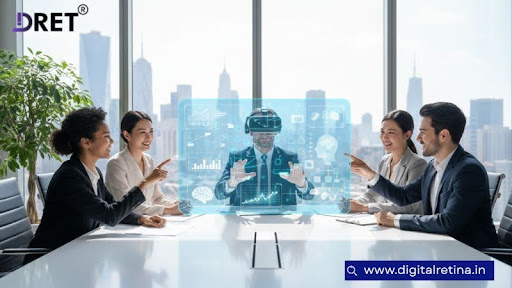
Artificial Intelligence (AI) has fundamentally changed how Pay-Per-Click (PPC) advertising works. Modern ad platforms no longer rely on static rules or manual optimizations. Instead, they use machine learning models that analyze user behavior, predict outcomes, and continuously improve campaign performance. This guide explains how AI works in PPC step by step, the technology behind it, and why AI-powered PPC is the future of advertising.
What Is AI in PPC Advertising?
AI in Pay-Per-Click advertising refers to the use of advanced machine learning algorithms, predictive analytics, and automation technologies to manage, optimize, and scale paid advertising campaigns across platforms such as Google Ads, Microsoft Ads, and social media networks. Instead of relying on manual rules and assumptions, AI analyzes large volumes of real-time and historical data to understand user behavior, predict outcomes, and make intelligent optimization decisions automatically.
Key functions of AI in PPC:
- Predicts which users are most likely to convert based on intent signals
- Automates bidding and budget allocation in real time
- Optimizes keywords, ad creatives, and audience targeting
- Continuously improves performance using ongoing learning
By processing thousands of data signals simultaneously—such as device, location, timing, and past interactions—AI ensures ads remain relevant, cost-efficient, and performance-driven.

How AI Works in PPC: Step-by-Step Process
Step 1: AI Collects and Processes User Data
AI systems begin by collecting and analyzing large volumes of real-time and historical data, including:
- Search queries and browsing patterns
- Location, device type, and time of day
- Ad interactions such as clicks, impressions, and conversions
- Historical campaign and account-level performance
This data allows AI to identify behavioral trends, contextual signals, and intent patterns across different user segments. Better and more accurate data enables AI to predict outcomes more effectively, resulting in precise targeting, reduced wasted spend, and higher conversion rates.
Step 2: AI Interprets User Intent Instead of Just Keywords
Unlike traditional PPC, which relies heavily on exact or phrase keyword matches, AI-powered PPC focuses on intent-based targeting. AI classifies users based on intent, such as:
- Informational: researching or learning
- Commercial: comparing products or services
- Transactional: ready to take action or purchase
This allows ads to appear for highly relevant searches—even when users phrase queries differently or use conversational language. AI in PPC identifies user intent by analyzing search behavior, context, and past interactions rather than relying only on keywords.
Step 3: AI Automates Keyword and Search Term Optimization
AI-powered PPC tools continuously refine keyword targeting by:
- Discovering new high-intent keywords from live search data
- Expanding reach using semantic understanding and broad match
- Removing irrelevant, low-quality, or non-converting search terms
- Improving alignment between keywords, ads, and landing pages
This ensures campaigns stay aligned with evolving search behavior and user language trends.
Step 4: Smart Bidding with Machine Learning
AI-driven bidding strategies evaluate thousands of auction signals in real time, including:
- Likelihood of conversion
- User device, location, and demographics
- Competition levels and auction dynamics
- Time-based and seasonal performance trends
Common AI-powered bidding strategies include:
- Maximize Conversions
- Target CPA (Cost Per Acquisition)
- Target ROAS (Return on Ad Spend)
AI smart bidding adjusts bids automatically in real time based on conversion probability and auction signals.
Step 5: AI Optimizes Ad Creatives Automatically
AI enhances ad creative performance by:
- Generating multiple headline and description variations
- Testing combinations across different user segments
- Identifying top-performing messaging patterns
- Aligning ad copy with user intent and search context
Responsive Search Ads are a clear example of how AI dynamically assembles and optimizes ad creatives for maximum relevance and engagement.
Step 6: AI-Powered Audience Targeting and Segmentation
AI improves audience targeting by:
- Predicting high-value and high-intent users
- Building in-market, affinity, and custom audience segments
- Creating lookalike or similar audiences
- Retargeting users based on past behavior and engagement
This ensures ads reach users at the most impactful stage of the buying journey, improving efficiency and conversion potential.
Step 7: AI Improves Quality Score and Landing Page Performance
AI analyzes post-click behavior to evaluate:
- Landing page relevance to ads and keywords
- Page load speed and overall user experience
- Navigation flow and conversion paths
Better alignment between ads, keywords, and landing pages results in:
- Higher Quality Scores
- Lower cost per click (CPC)
- Improved ad rank and visibility
Step 8: Continuous Learning and Real-Time Optimization
AI systems continuously learn and adapt by:
- Reallocating budgets to high-performing campaigns
- Pausing or adjusting underperforming ads and keywords
- Responding to market shifts and competitor activity
- Adapting to seasonality and demand changes
This continuous learning process makes AI-powered PPC adaptive, scalable, and future-ready, ensuring sustained performance over time.

Why Is AI the Future of PPC Advertising?
AI has become essential as digital advertising grows more complex, competitive, and data-driven. Modern ad platforms generate millions of signals every second, making manual campaign management inefficient and unsustainable. AI-powered PPC enables advertisers to process this complexity intelligently—turning data into real-time decisions that improve performance and efficiency.
Key reasons AI-powered PPC dominates the future:
- Handles massive data sets instantly by analyzing thousands of signals per auction
- Makes faster and more accurate decisions using predictive models and machine learning
- Enables hyper-personalized advertising based on user intent, behavior, and context
- Reduces manual workload by automating bidding, targeting, and optimization
- Improves ROI at scale by continuously reallocating spend to high-performing segments
As advertising platforms move toward automation-first and AI-driven models, manual PPC management becomes less effective. Brands that rely solely on human-led optimization risk slower performance, higher costs, and reduced visibility.
Human Expertise vs AI: Why Both Matter
AI excels at executing tasks quickly and efficiently, especially when processing large volumes of data and optimizing campaigns in real time. However, AI operates within the boundaries of the goals, data, and rules set by humans. While AI focuses on automation and optimization, humans bring critical elements that machines cannot replicate:
- Strategic direction by defining campaign goals, KPIs, and growth priorities.
- Business context by understanding market conditions, customer needs, and competitive positioning.
- Creative judgment by shaping messaging, tone, and brand storytelling.
- Ethical and brand oversight by ensuring compliance, transparency, and brand safety.
The most successful google ads strategies do not rely solely on automation or manual control. Instead, they combine human intelligence for strategy and creativity with AI automation for execution and optimization, creating a balanced, high-performing advertising system.
Common AI PPC Mistakes to Avoid
While AI can significantly improve PPC performance, it is not a “set it and forget it” solution. Many campaigns underperform due to poor setup or lack of strategic oversight. Common AI PPC mistakes include:
- Feeding AI poor or incomplete data, such as inaccurate conversion tracking or missing signals.
- Ignoring conversion tracking accuracy, which leads AI to optimize for the wrong outcomes.
- Over-automating without clear strategic goals, causing campaigns to drift without direction.
- Not allowing sufficient learning time, resulting in premature changes that disrupt algorithm performance.
AI relies heavily on data quality, consistency, and clear objectives. Without these foundations, even advanced automation can produce weak or misleading results.
Final Thoughts
AI has transformed PPC into a predictive, intent-driven advertising channel. Brands that adopt AI-powered PPC gain better targeting, higher efficiency, and stronger performance in competitive markets. At DRET, we build AI-optimized PPC strategies that balance automation with human expertise—helping brands stay visible, profitable, and future-ready.
Ready to Implement These Strategies?
Our team of digital marketing experts can help you navigate these trends and create a winning strategy.