
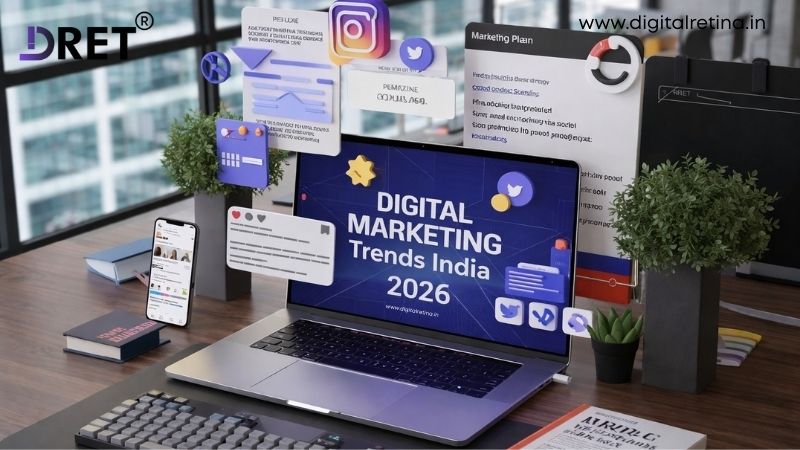
Digital Marketing Trends in India 2026 highlight a major shift toward AI-driven, data-centric, and highly localized marketing strategies as Indian consumers become more digitally mature and experience-focused. In 2026, brands are increasingly leveraging artificial intelligence for personalization, predictive analytics, automation, and conversational marketing, while short-form video, social commerce, and Connected TV continue to dominate user attention. Vernacular and regional-language content is emerging as a key growth driver, enabling businesses to connect with audiences beyond metro cities, while voice search and AI-powered search experiences are reshaping SEO and content discovery.
AI: The Foundation of Modern Digital Marketing
Artificial Intelligence has become a core component of digital marketing operations in India. By 2026, AI is no longer limited to automation or reporting; it plays a direct role in shaping marketing strategy, customer experience, and revenue growth. Indian brands are increasingly relying on AI to manage complex data, optimize performance, and respond to user behavior in real time. AI-driven platforms help brands:
Understand user intent at a granular level by analyzing search behavior, engagement patterns, and on-site interactions across devices
Predict campaign performance before spending budgets, allowing marketers to allocate resources more efficiently and reduce wasted ad spend
Personalize content, ads, and landing pages at scale, ensuring users receive relevant messaging based on their preferences, location, and stage in the buyer journey
Beyond performance marketing, AI also supports smarter content planning, SEO optimization, and customer support through intelligent chatbots and recommendation engines. This enables brands to deliver consistent experiences across multiple touchpoints while maintaining speed and accuracy.

Why Is AI Becoming the Most Important Part of Digital Marketing in 2026?
Digital marketing in India in 2026 is being driven by rapid adoption of Artificial Intelligence (AI), changing how brands plan, execute, and optimise campaigns across SEO, paid ads, social media, and content marketing. Businesses are actively using AI for predictive analytics, hyper-personalised user experiences, AI SEO, voice search optimisation, and automation, helping them target the right audience at the right time with higher ROI. Along with AI, short-form video marketing, social commerce, Connected TV (CTV) advertising, and regional language content are emerging as high-impact growth channels, especially for non-metro and vernacular audiences. As third-party cookies decline, marketers are also focusing on first-party data, privacy-first strategies, and intent-driven marketing, making relevance, trust, and measurable performance the core pillars of digital marketing success in India.
Voice Search: Changing the Way Indians Search Online
Voice search adoption has grown rapidly across India, particularly among mobile-first users and regional-language speakers. Instead of typing fragmented keywords, users now ask complete questions. Instead of entering fragmented keywords, users now ask complete, conversational questions such as “best digital marketing company near me” or “how to grow my business online in Hindi.” This behavioral shift signals a major change in how search intent is expressed and interpreted by search engines.
Effective voice search optimization in 2026 focuses on:
Conversational, question-based queries that mirror how users speak in real life
Clear and concise answers within content, ideally positioned in headings, FAQs, or short paragraphs
Strong local SEO signals, including location-specific keywords and optimized Google Business Profiles
Voice search is closely tied to intent, making it one of the highest-converting traffic sources when optimized correctly.

Regional SEO: Unlocking Scalable Growth in India
Regional SEO has emerged as one of the most powerful digital marketing strategies in India. With a majority of users preferring content in their native language, English-only optimization is no longer sufficient. Brands investing in regional SEO benefit from:
Lower keyword competition, making it easier to achieve higher rankings with relatively less effort
Higher trust among local audiences, as users naturally relate more to content in their native language
Stronger engagement and conversion rates, driven by better alignment with local intent and cultural relevance
Rather than simple translation, successful regional SEO adapts messaging to cultural and local search behavior, making brands feel more accessible and authentic.

Short-Form Video: India’s Most Influential Content Format
Short-form video continues to dominate attention across platforms like Instagram and YouTube. In India, these formats are especially effective due to mobile consumption habits and shorter attention spans. High-performing short video content typically includes:
Educational tips and quick explainers that solve a specific problem in under 30 seconds
Product walkthroughs or demos that visually communicate features and benefits
Customer stories and testimonials that build trust and social proof
Festival- and trend-based narratives that connect brands with cultural moments
In 2026, video-first storytelling is no longer optional—it is a core engagement strategy. Brands that integrate short-form video into their content, performance marketing, and social commerce efforts are better positioned to capture attention, build emotional connections, and drive measurable results in India’s competitive digital landscape.

Data Privacy and Trust: A New Competitive Advantage
As awareness around data usage increases, Indian consumers are becoming more selective about the brands they trust. Regulations and platform changes have further reduced reliance on third-party data. Forward-looking brands are now focusing on:
First-party data collection through ethical means, such as consent-based forms, subscriptions, and direct user interactions
Transparent communication about data usage, clearly explaining how information is collected, stored, and used
Secure and user-friendly digital experiences that protect user data without compromising usability
Search engines and digital platforms increasingly reward trustworthy brands with better visibility, while users reward them with higher engagement and conversions. In 2026, trust directly impacts both search performance and conversion outcomes, making data privacy a strategic priority rather than a technical afterthought.

Omnichannel Marketing: Creating Seamless Brand Experiences
Modern Indian consumers interact with brands across multiple platforms before making a purchase decision. Omnichannel marketing ensures consistency across all these touchpoints.
In 2026, successful omnichannel strategies go beyond simply being present everywhere. They ensure that messaging, brand tone, and user experience remain aligned, regardless of where the customer engages. This consistency builds confidence and reduces friction throughout the buyer journey. A strong omnichannel strategy typically includes:
Unified messaging across digital platforms, ensuring the brand story remains consistent
Integrated CRM and marketing automation, enabling personalized and timely communication
Consistent customer experience online and offline, especially for brands with physical presence
Brands that invest in seamless omnichannel journeys build stronger trust, improve engagement at every stage of the funnel, and achieve higher customer lifetime value. In an increasingly competitive digital environment, omnichannel execution has become a key differentiator for long-term growth.

Influencer and Community Marketing: Building Local Credibility
Influencer marketing in India has shifted toward micro and regional creators who connect deeply with niche audiences. Their content often feels more authentic and relatable than traditional celebrity endorsements. At the same time, brands are investing in owned communities to build long-term relationships beyond paid campaigns. These community-focused strategies often include:
WhatsApp and Telegram groups for direct audience interaction
Loyalty and referral programs that encourage repeat engagement
User-generated content initiatives that amplify authentic brand advocacy
By focusing on community-driven growth, brands can reduce reliance on paid advertising while increasing trust, retention, and long-term engagement in the Indian market.
Social Commerce and Shoppable Content
Social platforms are rapidly evolving into transaction-ready ecosystems in India. Users are increasingly comfortable discovering and purchasing products directly through videos, live streams, and shoppable posts, without leaving the platform. In 2026, effective social commerce strategies focus on:
Minimal friction in the buying process
Native checkout and UPI integrations
Content-led product discovery that blends storytelling with conversion
This convergence of content and commerce is reshaping how conversions happen, enabling brands to shorten purchase journeys and drive faster, more intuitive buying decisions.
Conclusion: Preparing for the Future of Digital Marketing in India
Digital marketing success in India in 2026 depends on adaptability. AI-powered insights, voice and regional search optimization, trust-driven strategies, and video-led engagement are shaping the next phase of growth. Brands that prioritize relevance over reach and experience over volume will lead India’s evolving digital ecosystem.
DRET helps businesses build future-ready digital marketing strategies with a strong focus on AI, advanced SEO, and regional market growth. Looking to align your brand with India’s top digital marketing trends for 2026? Connect with DRET today.
Ready to Implement These Strategies?
Our team of digital marketing experts can help you navigate these trends and create a winning strategy.